


Now, The Method…
Learn how to tell when your horse is uncomfortable and what is needed when unwanted behavior happens; such as bucking, biting, rearing, head tossing, kicking, pawing, pacing, hard to catch, cross firing, turning one way better than the other, etc. By releasing the tension and addressing the root of the problem the horse can then concentrate, creating a connection so communication is easier.

Stage 1: Evaluation/Body Work
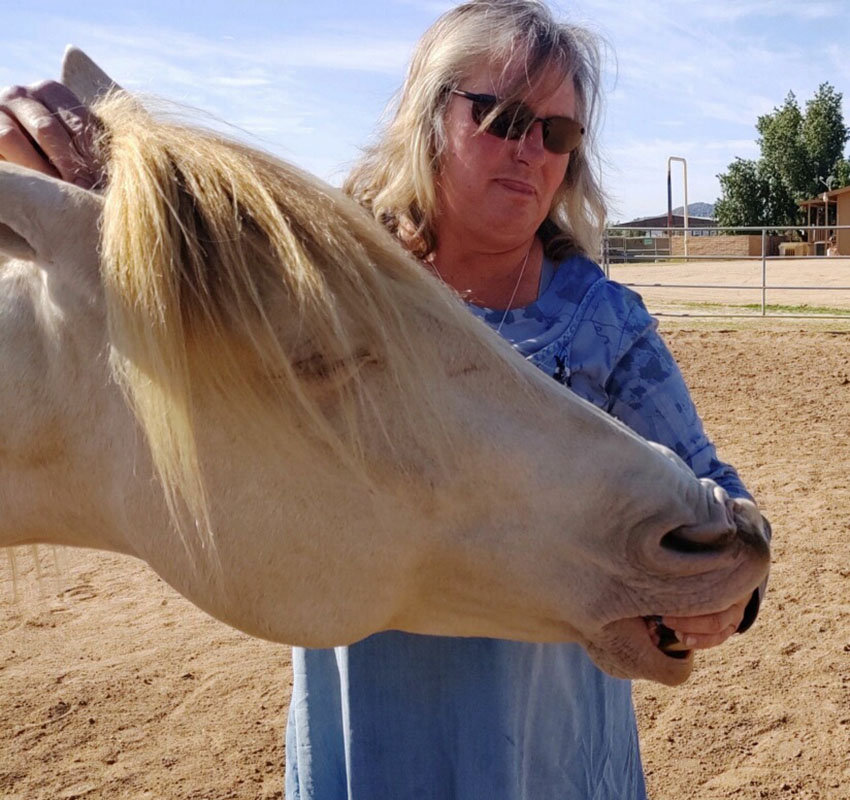
The evaluation of the horse takes into consideration: old injuries, conformation, skeletal balance, movement patterns, condition of the hooves, degree of riding, saddle fit and what the goals are for the future. During the first evaluation, Dee addresses specifically where and what kind of bodywork will benefit the horse. Then you will be personally instructed through hands on sessions to help answer any questions.
If necessary, Dee will advise you to work with an equine veterinarian, professional chiropractor, farrier, etc. It is important to have a team of professionals working together to care for your horse and especially when addressing major health issues. Dee may also suggest implementing a follow-up program to help assist in the learning process.
Stage 2: Ground Work/Preparation to Carry Weight Properly
Once we have identified and addressed sore and unbalanced areas of the body we then take it a step further and begin teaching the horse how to move properly to carry weight. It is possible to address a number of issues at this level to prepare for collection, leg yielding and all transitions under saddle.
Each lesson is focused not only on what the horse is doing with their body but how and why. We notice the horse’s attitude in relationship to where the body is blocked or stiff and release the tension through movement. Every exercise is designed to integrate different kinds of bodywork through each training session.
Remember patience, that this is a work in progress. Breaking old patterns, mental and physical, along with integrating body work, this may include the use of a round pen, cavillettis, biting up, and trailering the horse.


Stage 2: Ground Work/Preparation to Carry Weight Properly
Once we have identified and addressed sore and unbalanced areas of the body we then take it a step further and begin teaching the horse how to move properly to carry weight. It is possible to address a number of issues at this level to prepare for collection, leg yielding and all transitions under saddle.
Each lesson is focused not only on what the horse is doing with their body but how and why. We notice the horse’s attitude in relationship to where the body is blocked or stiff and release the tension through movement. Every exercise is designed to integrate different kinds of bodywork through each training session.
Remember patience, that this is a work in progress. Breaking old patterns, mental and physical, along with integrating body work, this may include the use of a round pen, cavillettis, biting up, and trailering the horse.

Stage 3: Riding/Properly Carrying Weight
We begin stage one with a checklist during the grooming process. Stage two, we teach the horse how to properly carry weight from the ground. Stage three includes self-awareness exercises for the rider including on the ground and in the saddle. and working over cavillettis. At this level, the exercises taught from the ground are now introduced from the horse’s back.
The beautiful thing is that it doesn’t matter what level or type of discipline you ride. The tools of self-awareness, balance, strength and confidence for a rider are learned through exercises. What Dee teaches is how to become aware of what you are doing in relationship to what your horse is doing.
Developing a connection, integrating the bodywork and groundwork will improve your relationship with your horse and your horse’s performance exponentially. You may find when things are imbalanced you and your horse are more capable than what you had previously thought possible.
Dee Howe is not a licensed veterinarian. She does not treat or diagnose illnesses. She is an equine consultant, addressing the present state of the horse being evaluated. Dee is a practitioner of bodywork that is based on Biodynamic Craniosacral Therapy. This alternative therapy is not licensed by the state of California. Dee Howe is a traveling consultant and horse trainer/teacher that focuses on the body as a whole to improve overall health and performance of the horse.
We recommend that you consult with your veterinarian before choosing to engage in any type of body work or alternative therapy.